

Culture and Change Management
How to support employees through organizational change
Have you ever felt your team seemed confused or resistant in the face of a major transformation? Perhaps you noticed anxiety, fear or even conflict emerging as changes were being rolled out. How can you deal with these issues strategically while keeping people engaged and productive?
The truth is that organizational change affects much more than processes and structures; it touches emotions, beliefs and routines. That is why understanding what employees feel at each stage of the process is essential to successful change management.
A widely recognized and very useful model in this context is the Kubler Ross Change Curve. Adapted from studies on the emotional side of grief, it describes the different emotional reactions people go through during periods of organizational change. Although each employee has a unique experience, the Curve helps us identify emotional patterns that are common to many people, making it possible to anticipate and proactively respond to the challenges of the transition.
The Change Curve is not just a tool for understanding emotions; it is a strategic guide for leaders and managers who need to guide their teams efficiently and with empathy. Let’s explore its main phases to understand how they show up in the workplace and, more importantly, how to manage them so that the change succeeds.
The phases of the Change Curve
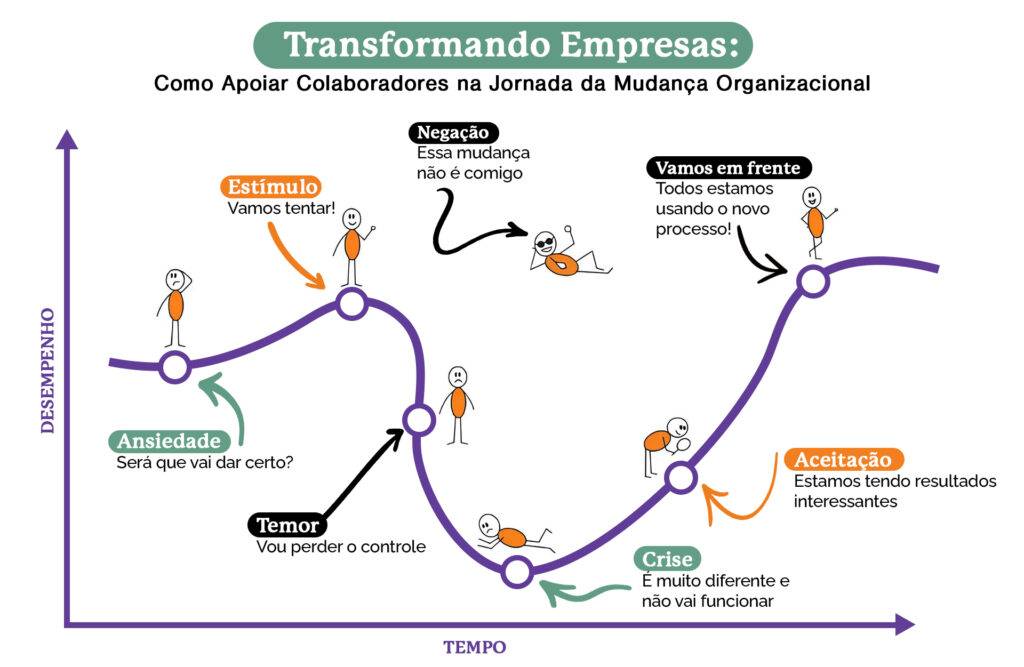
Understanding the Change Curve is essential for managing the emotions and behaviors that arise during moments of transition. Here are the main phases, described in detail so you can see how each one affects employees and team dynamics:
- Anxiety
As soon as the change is announced, the first feeling that arises in many people is anxiety. This is the moment when employees do not yet know exactly how they will be affected and start imagining scenarios, often negative ones. Questions like “Will my role change?” or “Will I still have a place in this organization?” are common.
Why it matters: When anxiety is not addressed, it can generate misinformation and rumors, creating a climate of insecurity that harms the transition.
How to respond:
Share as much information as possible about the change, reinforcing that the goal is to benefit both the organization and its employees. Transparent communication is key.
- Doubt and fear
As more details about the change are revealed, doubts begin to surface, often accompanied by fear. It is a natural reaction to the unknown, especially if the change challenges employees’ comfort zone. This fear can show up as passive resistance or even as more reactive behavior.
Why it matters: Ignoring doubts can amplify fear and lead to a loss of trust in leadership, undermining engagement.
How to respond:
Reinforce that it is normal to have doubts and offer support, such as training, mentoring and direct access to managers to address concerns.
- Guilt
Some people may start to feel guilty for not adapting as quickly as they expected. This phase tends to affect professionals who carry a high level of responsibility and hold themselves to high performance standards, because they may feel they are not meeting expectations.
Why it matters: Guilt can lead to emotional exhaustion and demotivation, reducing productivity and the group’s morale.
How to respond:
Acknowledge small advances and avoid excessive pressure. Show that adapting takes time and is a joint effort.
- Escape and denial
When the impact of the change becomes unavoidable, some employees may try to avoid it or deny the need for it. They may resist training, reject new tools or ignore newly implemented processes. This phase is marked by self-protective behavior, in which people try to hold on to what is familiar.
Why it matters: Prolonged denial can spread to other team members, creating a barrier to the organization’s progress.
How to respond:
Hold frank conversations, highlighting the benefits of the change and why it matters for everyone to get on board. Involve team leaders as agents of influence.
- Conflict or acceptance
As the change settles in, employees enter a phase of decision. Some may show internal or interpersonal conflict as they try to adjust, while others are already beginning to accept the new reality. Acceptance lets them try out solutions, test new behaviors and even lead the transition.
Why it matters: Fostering acceptance can turn the first “adopters” into change agents, inspiring the rest of the team.
How to respond:
Make it easier to resolve conflicts through mediation and by encouraging teamwork. Celebrate those who show acceptance to inspire others.
Why the Change Curve is essential to people management
Understanding the emotional phases employees go through during a change is not just useful, it is essential. That is because each of these phases directly influences how people work, collaborate and communicate. When leaders recognize and address these emotions, resistance turns into engagement, and challenges become opportunities for growth and for moving the change forward.
The Change Curve allows leaders to adjust their approach in real time, offering support, building environments of trust and fostering a sense of belonging. After all, change is not only about systems and processes; above all, it is about people.
Practical tips for successfully implementing change management
Beyond understanding the emotional phases of change, it is important to take practical actions to ensure a successful transition. Here are some tips:
- Plan the change in advance
Before communicating any change, have a clear plan. Include strategies for communication, training and ongoing support. - Communicate consistently and transparently
Use multiple channels to convey the message, and adapt the language to different audiences within the organization. - Train leaders as multipliers of change
Leaders have a crucial role in change. Make sure they are prepared to guide their teams with empathy and firmness.
- Monitor and adjust continuously
Keep a close eye on how employees are reacting (use the Change Curve) and adjust the change process as needed. - Celebrate milestones and recognize effort
Value individual and collective progress, reinforcing the importance of each person’s role in the organization’s success.
Conclusion
Change management goes far beyond implementing new rules or processes. It is a human and strategic effort that depends on understanding employees’ emotions. Using the Change Curve as a guide can turn challenges into opportunities and resistance into engagement.
At WePeople, we help organizations through moments of change with a focus on people, because we believe they are the force that drives any transformation and evolution. If your company is going through a technological, cultural or structural change, count on us to build a stronger future, together.
Ready to evolve your management? Share this article with your team and start today!