

Vertex 01
Culture and Change Management
Culture that sustains strategy and change that reaches adoption. We prepare the organization before transformation becomes urgent.
What is Culture and Change Management?
It is the front of WePeople's Business Transformation Journey that aligns behavior with strategy. It brings together two complementary disciplines: organizational culture, which defines how the company makes decisions and operates day to day, and change management, which takes each transformation from decision to adoption. Culture prepares the ground; change management ensures the transformation reaches the front line and lasts.
The thesis
Most transformations do not fail in the strategy; they fail in sustainment.
When culture does not keep up, leaders do not engage and behaviors do not change, even good decisions lose traction. According to McKinsey, about 70% of transformations fail to reach their goals, and in 72% of the programs that fail, the main barrier is employee resistance or management behavior. That is why culture and change go together in this vertex.
Signs your company needs this
- A critical transformation (ERP, merger, acquisition, restructuring or new management model) faces resistance or low buy-in.
- The stated values are not the culture lived day to day.
- Rapid growth has started to disrupt the way decisions are made and work gets done.
- Every change starts from scratch, with no change capability built into the organization.
-
7x
more likely to meet or exceed project goals with excellent change management
Source: Prosci, Best Practices in Change Management -
4x
more likely to succeed when mindsets and behaviors are addressed
Source: McKinsey Quarterly, Transformational Change Survey (2010) -
92%
of large companies name culture, not technology, as the main barrier to becoming data-driven
Source: NewVantage Partners, published in Harvard Business Review (2021)
Solutions in this vertex
How we go deeper on each front
 Solution
Organizational Culture
Culture mapping and evolution: a diagnosis of the lived culture and a practical agenda to align behavior with strategy.
Learn more Solution
Change Management
Implementation of change management projects for ERPs, mergers, acquisitions and restructurings, from decision to adoption.
Learn morePart 1
Organizational culture: what it is and how we evolve it
Organizational culture is the set of recurring behaviors, symbols and systems that define how a company makes decisions and operates. It either sustains or holds back the strategy. WePeople diagnoses the lived culture, not just the stated one, defines the culture the strategy requires and turns the gaps into a practical evolution agenda, deciding with senior leadership what to preserve (essence) and what to evolve (progress).
Five phases of cultural evolution
- Culture mapping and journey planning
- Involving leaders and influencers
- Rolling out organizational, local and relational communication
- Mapping impacts, coherence and learning
- Support and perpetuity
Part 2
Change management: what it is and how we lead it
Change management is the discipline that takes a transformation from decision to adoption, preparing people, leaders and culture to operate in the new model. It combines technical rigor and human care: readiness, stakeholder engagement, communication, training and adoption metrics. We work on ERP rollouts, mergers and acquisitions, restructurings, training for leaders, BPs and change agents, and setting up Business Transformation offices.
Five phases of change management
- Journey planning and organizational readiness
- Raising awareness and involving leadership and stakeholders
- Organizational, relational and local communication
- Mapping organizational impacts and learning
- Change sustainment metrics
Certifications behind this vertex
-
 Barrett Values Centre (Certified Consultant)
-
 Walking the Talk
-
 Prosci ADKAR Model Mastery
-
 Cameron Institute
-
 Harvard
-
 Prosci Change Management (Advanced Change Practitioner)
-
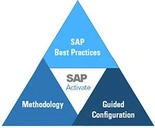 SAP Activate (OCM)
-
 HCMBOK 3G Practitioner (HCMI)
-
 Agile Change Agent (APMG)
-
 Design Thinking Professional (CertiProf)
-
 CIPD Approved Centre
Proof
Intelbras
The SAP S/4HANA implementation was a strategic step to modernize management at Intelbras. The change management project mobilized hundreds of employees and change agents through communication, training and leadership engagement.
See the case studyFrequently asked questions
Culture and change management in practice
What is the difference between organizational culture and change management?
Organizational culture is the pattern of behaviors, symbols and systems that defines how a company makes decisions and operates over time. Change management is the discipline that leads a specific transformation, such as an ERP, a merger or a new management model, from decision to adoption. Culture determines how ready the company is to change; change management ensures each change actually happens.
What is organizational change management?
It is the discipline that prepares people, leaders and culture to adopt a transformation with less friction and more buy-in, from decision to adoption. According to Prosci, projects with excellent change management are 7 times more likely to meet or exceed their goals.
What is the difference between organizational culture and climate?
Culture is the set of recurring behaviors and ways of working that define how the organization makes decisions and operates. Climate is how people perceive the work environment at a given moment. That is why the diagnosis looks at the lived culture, not just the climate.
When should you hire a change management consultancy?
The best time is before it becomes urgent: when a major transformation (ERP, merger, acquisition, restructuring or new management model) is on the radar, not after resistance has already appeared. Building readiness early reduces friction, protects the schedule and increases buy-in.
What is change readiness?
It is how prepared people, leaders and culture are to adopt a change. Assessing it before you start shows where resistance is likely to appear and guides the communication, engagement and support plan.
Let's talk about your scenario.
Tell us about your culture, performance or leadership challenge. We will get back to you with perspectives that apply to your context.
Get in touch